Why Can a Shampoo Bar Make Hair Feel Dry or Tangled?
Quick answer
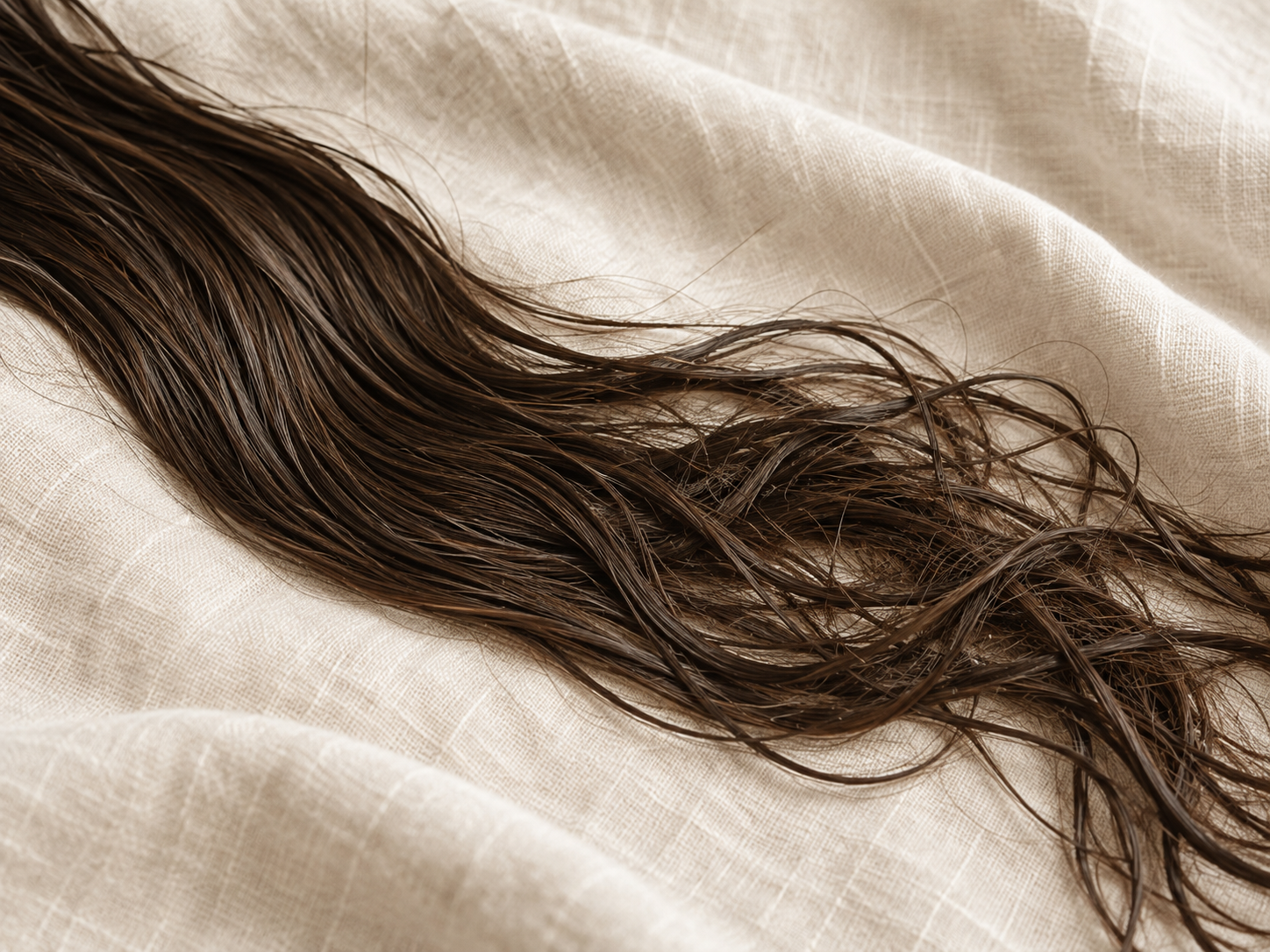
A shampoo bar can leave hair feeling dry, rough or tangled for more than one reason. The cleanser may remove more surface oil and lubrication than the hair needs. Hair may also have more friction after washing because of its condition, the formula’s conditioning balance, pH or the way the shampoo is used. Long, bleached, chemically treated or weathered hair may notice these effects more strongly. The useful question is what is making the hair harder to slide, separate and comb after washing.
What does “dry” hair actually feel like?
People often use dry to describe several sensations at once.
Hair may feel:
- rough
- squeaky
- stiff
- frizzy
- difficult to separate
- difficult to comb
- more tangled than usual
These experiences overlap, but they are not identical.
Hair can feel “dry” because there is less surface lubrication.
It can also feel dry because the hair surface has become higher-friction and neighboring fibers do not slide past each other easily.
So post-shampoo dryness is partly a sensory and friction problem, not simply a question of how much water is inside the hair.
Cleansing and lubrication have to stay in balance
Shampoo is designed to remove sebum, soil and product residues.
That is necessary.
But oils and surface lipids also contribute to lubrication.
If cleansing removes more lubrication than a particular head of hair needs, the result may feel very clean but also:
- squeaky
- rough
- stiff
- harder to comb
That does not mean cleansing itself is bad.
It means a shampoo has to balance:
removing enough
with
leaving the hair manageable after rinsing.
That balance depends on the finished formulation, not on one ingredient alone.
Why does friction matter so much?
Hair fibers constantly move against one another during washing, rinsing, drying and combing.
When the surface is smooth and well lubricated, fibers can slide past one another more easily.
When friction increases, they are more likely to catch, snag and resist movement.
That can feel like:
- roughness
- tangling
- frizz
- difficult wet combing
- difficult dry combing
So when someone says a shampoo made their hair feel “dry,” part of what they may actually be noticing is higher friction.
Why does damaged hair often tangle more easily?
The surface of healthy hair is protected by overlapping cuticle cells and a lipid-rich outer layer.
Over time, that surface can weather.
Bleaching, coloring, chemical treatments, heat styling, UV exposure, brushing and everyday mechanical wear can all change the hair surface.
As the surface becomes less intact, friction can increase.
That helps explain why the same shampoo may feel acceptable on relatively undamaged hair but too rough on bleached, chemically treated or weathered hair.
The shampoo has not necessarily changed.
The hair surface has.
Does shampoo pH matter?
It can.
pH can influence the electrical charge at the hair surface.
More alkaline conditions may increase negative surface charge and fiber-to-fiber friction, which may contribute to frizz, rough feel and tangling.
But there is an important limit:
pH is one formulation variable, not a complete prediction of shampoo performance.
There is no single pH number that guarantees a shampoo will feel gentle, conditioning or easy to comb.
Surfactants, conditioning materials, deposition and hair condition also matter.
Are soap-based shampoo bars more likely to feel rough?
They can present additional challenges.
Traditional soap is generally alkaline, and its interaction with hair differs from a modern syndet shampoo.
In hard water, soap can also form less-soluble material with calcium and magnesium, creating another possible source of difficult-to-manage hair.
But category alone is not enough to predict the final experience.
A syndet bar can still feel too cleansing or insufficiently conditioning for a particular person.
For the cleansing-system difference, see:
Shampoo Bar vs. Soap Bar: What’s the Difference?
For water-related effects, see:
Can hair rinse clean and still feel tangled?
Yes.
Clean rinsing and easy detangling are different performance questions.
A formula may remove oil and rinse without an obvious film while still leaving the hair with more friction than the user prefers.
This can be especially noticeable on:
- long hair
- weathered ends
- bleached or colored hair
- hair that normally depends on conditioner for detangling
So:
No residue does not automatically mean easy to comb.
What does conditioner change?
Conditioning ingredients can deposit on the hair surface and reduce charge and friction.
That can improve:
- wet combing
- dry combing
- detangling
- smoothness
- manageability
This can be especially noticeable on damaged hair, where the surface may interact more strongly with some conditioning materials.
So if hair tangles after shampooing, the answer is not always to reduce cleansing.
Sometimes the missing part of the experience is adequate conditioning.
Whether someone needs a separate conditioner is a different question.
Can the way you use a shampoo bar make tangling worse?
Yes, potentially.
Mechanical friction during washing matters.
Repeatedly rubbing a solid bar through long hair, piling the hair on top of the head or aggressively rubbing the lengths can increase fiber-to-fiber contact.
That can make tangling worse even when the shampoo formula itself is acceptable.
A more controlled approach is to focus cleansing mainly where oil tends to accumulate and avoid unnecessary rubbing through the lengths.
The aim is to clean the hair—not to mechanically work every strand against every other strand.
How can you narrow down what is happening?
| What you notice | What to investigate first |
|---|---|
| Hair feels very squeaky immediately after rinsing | Cleansing / lubrication balance |
| Hair is clean but difficult to comb | Friction / conditioning balance |
| Ends tangle much more than roots | Weathering or damage along the lengths |
| Hair feels coated rather than rough | Residue / deposition rather than simple dryness |
| Problem appears mainly after direct bar rubbing | Washing technique / mechanical friction |
| Problem changes strongly between water sources | Water chemistry may be contributing |
This is a troubleshooting framework, not a diagnostic test.
More than one factor can be present at the same time.
Dry, tangled and coated are not the same problem
These experiences are easy to confuse.
Dry or rough
Hair feels high-friction, squeaky or less lubricated.
Tangled
Hair fibers catch or interlock and become difficult to separate or comb.
Coated or waxy
Hair feels as though material remains on the surface.
They can occur together, but they should not automatically be treated as the same problem.
For coated or waxy hair, see:
Should you simply switch to a milder shampoo?
Sometimes that may help, but it is not always the whole answer.
If cleansing is clearly too strong for the hair, a different cleansing balance may improve the experience.
But if the main problem is weathered lengths, high friction, washing technique or insufficient conditioning, simply reducing cleansing may not solve everything.
The better question is:
Does the shampoo clean effectively while leaving the hair manageable for that person’s hair and routine?
That is a finished-product question.
How Bare Sway thinks about dry feel and tangling
For Bare Sway, shampoo performance cannot be judged only by how effectively a formula removes oil.
The after-wash experience matters too.
Our current hair-development work therefore treats several questions separately:
- Does the shampoo cleanse effectively?
- Does it rinse cleanly?
- Does hair feel excessively rough or squeaky?
- Is wet combing unacceptably difficult?
- Does tangling increase after repeated use?
- How does the experience change across different hair conditions and routines?
Our current direction is a modern syndet solid shampoo, but that category alone does not establish the final sensory result.
Dry feel, friction and detangling performance have to be evaluated on the finished formula.
Frequently asked questions
Why does my hair feel dry after using a shampoo bar?
The cleanser may remove more surface oil or lubrication than your hair needs, but dry feel can also reflect higher hair-fiber friction, insufficient conditioning or pre-existing hair damage.
Why does my hair tangle after shampooing?
Tangling becomes more likely when friction between hair fibers increases. Hair condition, washing technique, pH, cleansing balance and conditioning can all contribute.
Does a high-pH shampoo make hair more tangled?
Higher pH can increase hair-surface charge and friction, which may contribute to tangling and frizz. But pH alone does not predict the complete performance of a shampoo.
Are syndet shampoo bars less drying than soap bars?
Syndet systems give formulators more control over cleansing chemistry and pH, but “syndet” alone does not guarantee that a finished shampoo will feel gentle or conditioning.
Can damaged or bleached hair tangle more easily?
Yes. Chemical and mechanical weathering can increase surface friction, making damaged hair more prone to snagging and difficult combing.
Can rubbing a shampoo bar directly on hair cause tangles?
It can increase mechanical friction, particularly on longer hair. How much this matters depends on hair length, condition and washing technique.
Does conditioner reduce tangling?
Conditioning ingredients can reduce hair-surface charge and friction, helping improve combing and detangling.
Does dry or tangled hair mean I have buildup?
Not necessarily. Buildup more often feels coated or heavy. Roughness and tangling can occur without obvious residue.
Sources & further reading
- Dias et al. — The Shampoo pH can Affect the Hair: Myth or Reality?
- D’Souza & Rathi — Shampoo and Conditioners: What a Dermatologist Should Know?
- Research article — Understanding and controlling the friction of human hair
- Research article — On Hair Care Physicochemistry: From Structure and Degradation to Novel Biobased Conditioning Agents
- Research article — Hair Cosmetics: An Overview