How to Use Herbs in a Bath Without the Mess
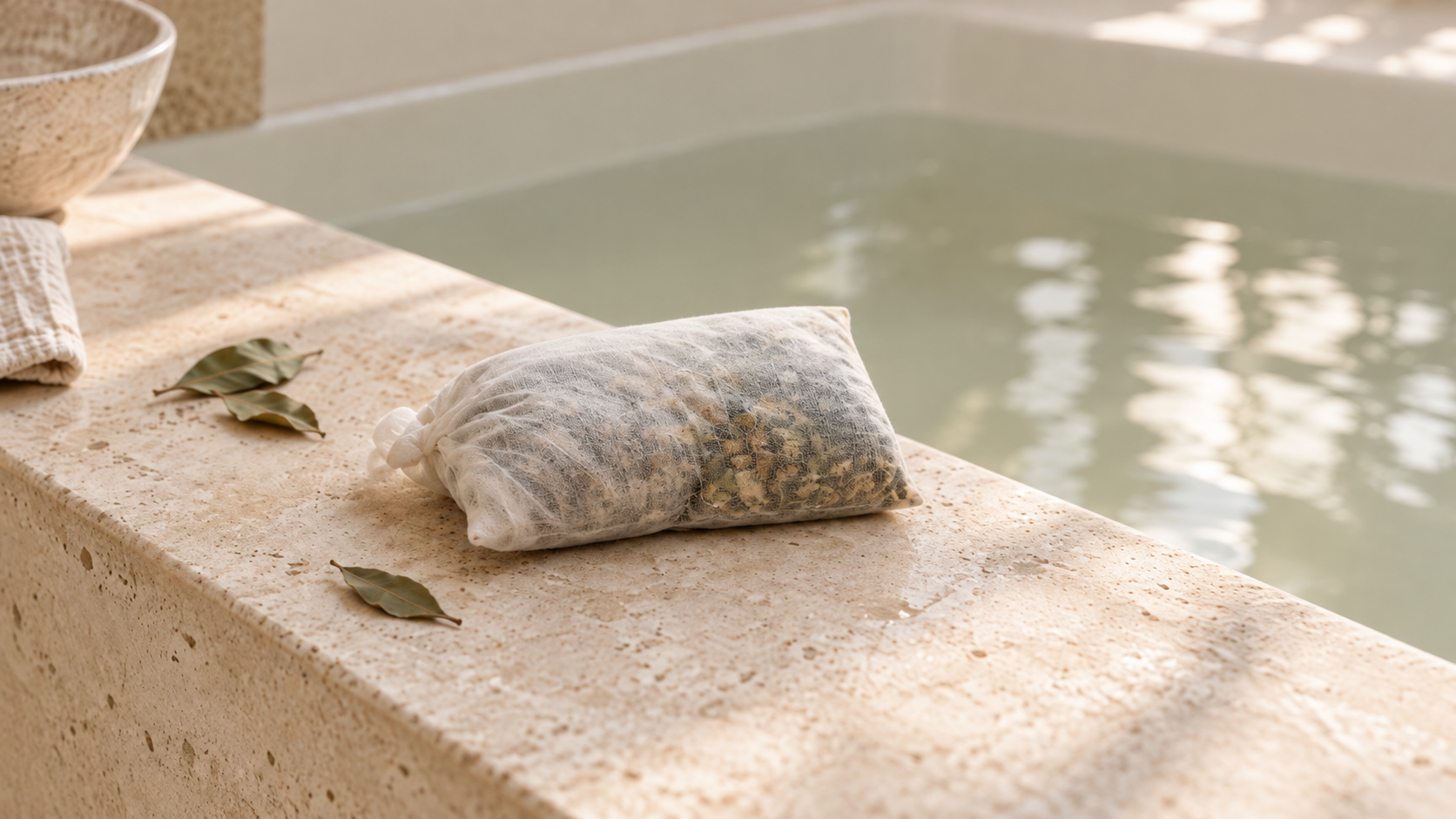
To reduce loose herbs and petals in a bath, use botanicals intended for bathing inside a suitable bath sachet, or prepare and strain an infusion according to the blend’s instructions. Loose botanicals are another option if you accept the extra collection and cleanup. A sachet helps contain plant pieces, but it does not guarantee zero residue, no rinsing, or a drain that cannot clog.
A bath with herbs or flowers can sound appealing until you picture the leaves left behind. Before choosing a blend, it helps to decide where you want the plant material to be: inside a bag, outside the tub after straining, or floating in the water.
That choice changes the preparation and the cleanup. You might be happy to strain a blend before your bath, or you might prefer something already filled and ready to use. Seeing petals in the water may be part of the experience you want. There is room for each preference.
This guide covers materials and products intended for bathing. A dried flower, kitchen herb, decorative potpourri, or drinkable tea is not automatically a suitable bath ingredient just because it comes from a plant.
How to use herbs in a bath: choose among three methods
The main difference is when you separate the plants from the water. With a sachet, the bag holds the material during use. With a strained infusion, you separate it before adding the liquid to the tub. With loose botanicals, you leave the collection until afterward.
Choose a method supported by the particular blend’s directions. If those directions do not explain how to prepare it for bathing, ask the maker before improvising.
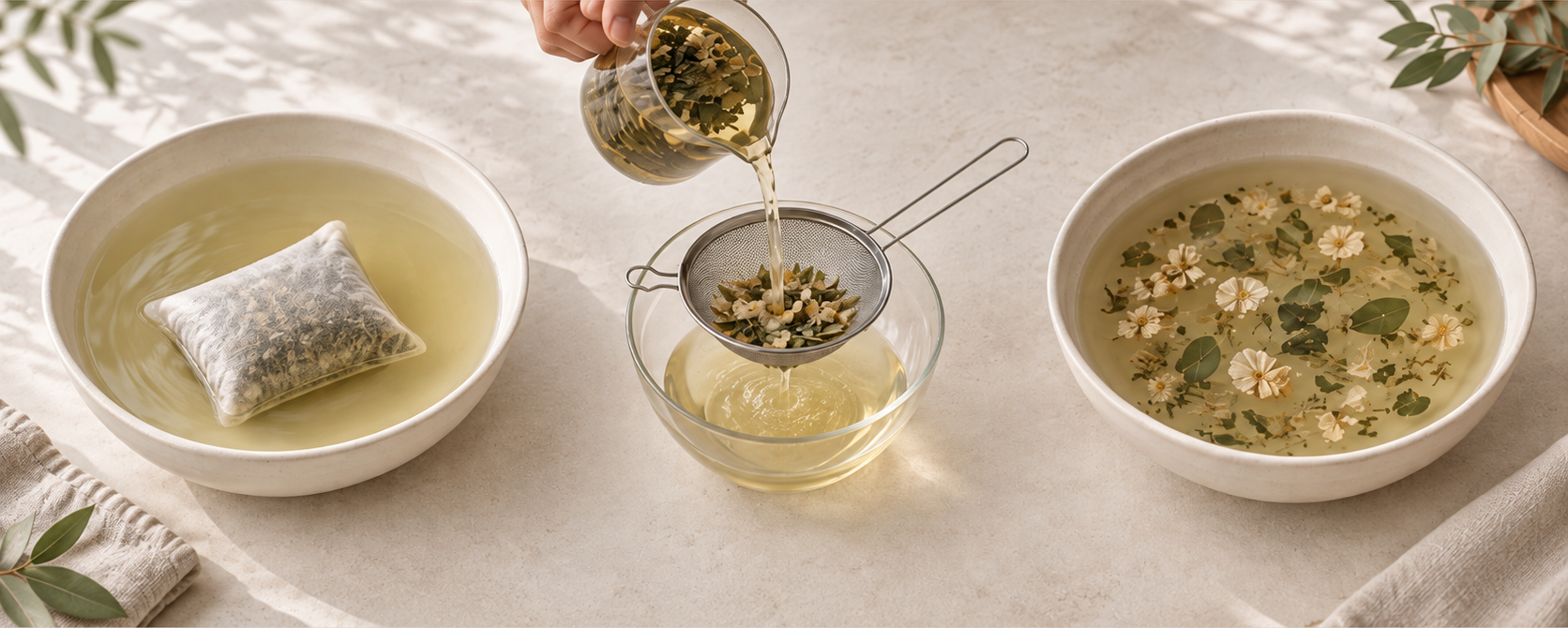
1. Keep botanicals inside a suitable bath sachet
A bath sachet holds a bathing blend in a pouch while it is used. Some come filled; others are empty bags that you fill with a compatible blend. If you are comparing those purchases, our guide to bath sachets and loose botanicals explains what is included in each.
Before use, check the bag and its closure. Follow the directions for filling, securing, placing, and removing it. An empty pouch needs instructions as well as a suitable blend; its appearance alone does not establish that it is intended for use in a bath.
Keep a ready-filled sachet closed unless the product specifically tells you to open it. Do not assume that squeezing it firmly, pulling on its string, or rubbing it against your skin is part of the intended use.
Plan where the wet bag will go afterward. Having a suitable container nearby gives you somewhere to place it while you finish tidying the tub. Follow the product’s disposal or care instructions, then check for escaped pieces and rinse or clean the tub as directed by its manufacturer.
This method may suit you if keeping the plant material together matters more than seeing individual petals floating around you. It still leaves a wet bag to handle and a tub to check.
2. Prepare an infusion and strain it before adding it to the tub
An infusion is liquid prepared by steeping a blend. For a product that supports this method, the basic sequence is to prepare it according to its directions, strain out the plant material, and add the prepared liquid as instructed.
This moves the separation step to before your bath. The strainer and preparation container then need cleaning, even if fewer loose pieces enter the tub.
Use the blend’s specified amount, preparation method, and bathing directions. This guide does not supply a universal steeping time or temperature: instructions for one botanical blend should not be treated as instructions for every other one.
Check that you have the suitable preparation and straining equipment before starting. If the instructions are unclear about what should go into the tub, clarify that with the maker instead of guessing.
A strained infusion may appeal to you if you prefer to prepare your bath in advance and keep most plant material out of the tub. Straining, however, does not establish that the liquid will leave no residue or that every fine particle has been removed.
3. Use loose petals or herbs if you accept the extra cleanup
Loose botanicals make the plant material part of the visible bath. They also leave you with plant pieces to collect afterward.
Choose this approach only when the product is intended for bathing and its instructions allow loose use. Decide how you will collect the pieces before adding them. After the bath, collect the visible material rather than intentionally washing it down the drain, and follow the product’s disposal guidance.
A drain catcher is not a promise that the cleanup will take care of itself. In one discussion about petal-bath cleanup, a bather described scooping petals from the water and clearing petals from the catcher so the water could continue draining. That is an individual experience, but it illustrates the extra handling to consider.
Loose petals may suit someone who enjoys the appearance and accepts that final collection step. If the thought of gathering wet leaves takes away from the bath, a contained or strained method may be a better fit for your routine.
Compare preparation and cleanup
| Method | Where the plants are during the bath | Preparation to consider | Cleanup to expect |
|---|---|---|---|
| Suitable bath sachet | Intended to remain inside the bag | Check the bag, closure, and product directions; fill it only if required | Remove the wet bag, check for escaped pieces, and follow tub-care directions |
| Strained infusion | Separated before the prepared liquid enters the tub | Prepare and strain the blend as directed | Handle the strained plants, clean the equipment, and check the tub |
| Loose botanicals | In the bathwater | Confirm loose use is intended and plan how to collect the material | Collect visible pieces and check the tub and catcher afterward |
These are differences in method, not measured rankings. The table does not establish which option is fastest, how much residue it leaves, or whether it suits a particular tub.
What a sachet does—and does not do
A sachet gives plant material a container. That is its practical role. How well a particular bag performs depends on the actual product, including its material, closure, and condition during use.
“Contained” does not mean “nothing left behind.” A bag can release small particles, and the water can still leave something to rinse away. A sachet also does not establish that a botanical blend will not tint or mark a surface. Follow the bath product’s directions and your tub manufacturer’s care guidance.
Nor does containing the plants tell you how strongly the bath will smell. If scent is your main reason for choosing a blend, read about choosing your bath scent experience before deciding that a plant-filled bag will meet your expectations.
What we’ve observed in an early sachet test
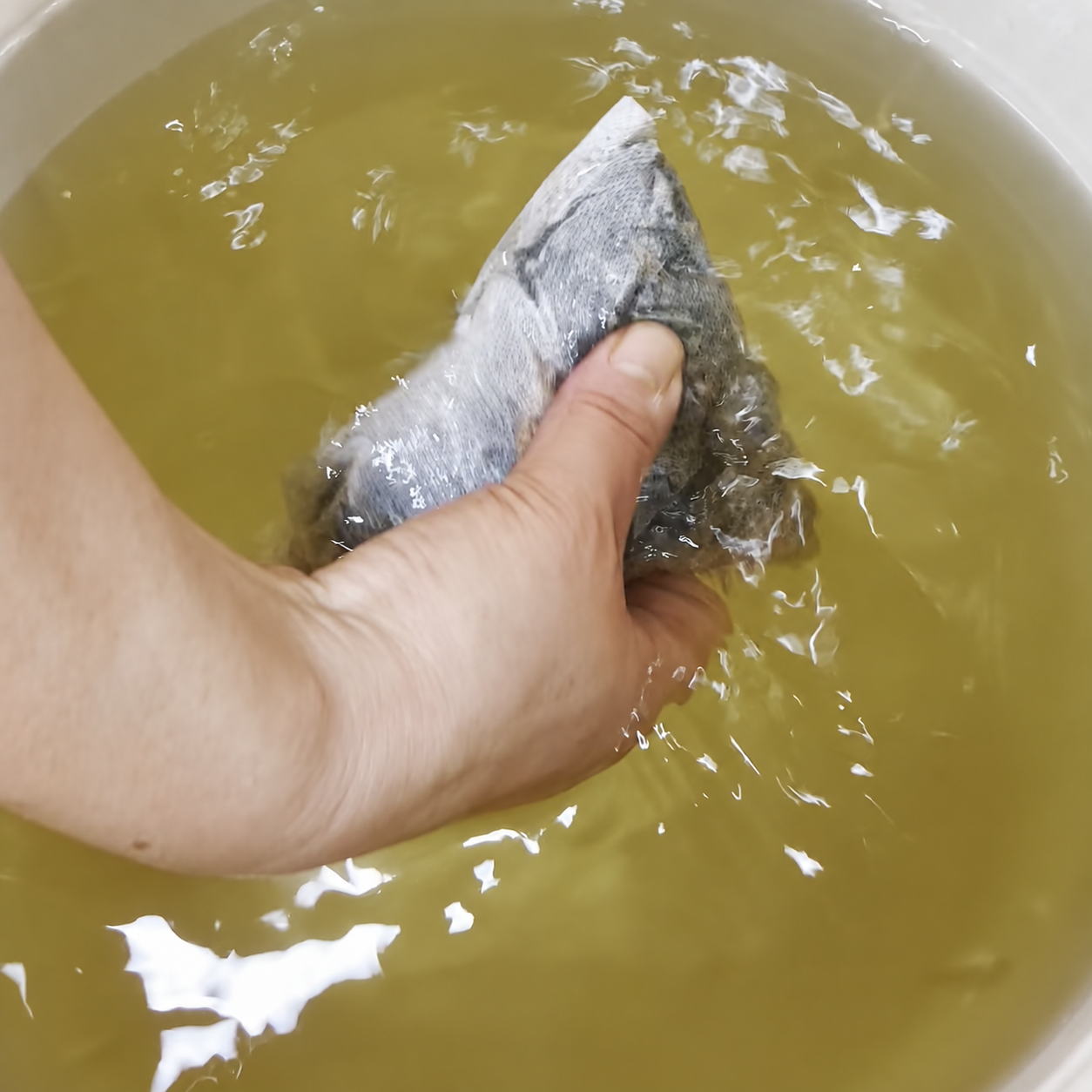
In an early prototype test, the filled botanical sachet stayed intact while immersed and gently handled in water, with no obvious larger botanical pieces escaping during the recorded test.
This is an early-use observation. Final performance will depend on the confirmed fabric, weave, seams, closure, botanical particle size, and use conditions.
How to choose your method
Start with the part of the process you most want to simplify.
If you would rather avoid handling loose wet plants afterward, look at a suitable sachet or a blend prepared and strained before use. If you do not mind an extra preparation container, an infusion may fit your routine. If the floating petals are what appeal to you, allow for collecting them afterward.
Then look at the directions. A method that sounds convenient in a general guide still needs to fit the product you actually have. Choose instructions you can follow with the time and equipment you want to use.
Finally, include the cleanup in your decision. Compare the whole sequence—preparing, bathing, removing the material, and cleaning up—rather than choosing only by how the bath looks at the start.
What we still need to test
Final sachet material and construction
Plant containment and cleanup under real bath conditions
Final product instructions and in-water performance

Sources and reading notes
The prototype observation refers to a short internal use video reviewed on September 21, 2026. It is not a controlled comparison or a complete bath-and-cleanup record.
General examples of bagged botanicals and strained infusions appear in the American College of Healthcare Sciences’ herbal bath guide and Healthline’s bath tea article. Garden Therapy’s bath tea guide also discusses containing loose plant material. These references support the discussion of methods; their recipes and health claims are not reproduced here.
The linked consumer discussion about petal cleanup is an individual account, not a product test.
Frequently asked questions
Can I put any dried herbs or flowers in my bath?
No. Being dried or plant-based does not establish that a material is intended for bathing. Choose a bath product or blend with clear ingredients and bathing directions. Do not treat decorative dried flowers, potpourri, or kitchen herbs as interchangeable with it.
Do I have to put the herbs directly in the tub?
No. Depending on the blend’s instructions, a suitable sachet or a prepared, strained infusion may be an option. Choose the method the product supports rather than borrowing directions from a different blend.
Will a bath sachet prevent a clogged drain?
It is not a guarantee. A sachet is intended to hold plant material, but its performance needs to be assessed for the particular bag and blend. Check for escaped pieces and follow the product’s removal and cleanup instructions.
Can the water leave residue even when the plants stay in the bag?
Yes, keeping plant pieces inside a bag does not establish that the tub will need no rinsing. Follow the product’s cleanup directions and the tub manufacturer’s care guidance. We have not yet completed residue testing for BARE SWAY.
What if I have already used loose petals?
Collect the visible plant material rather than intentionally sending it down the drain. Follow the product’s disposal instructions and your tub’s care guidance. This guide covers handling bath botanicals, not diagnosing or repairing a drainage problem.
Choose the format that fits your routine
Want to understand what comes inside a filled sachet and what you would need to prepare yourself? Compare bath sachets and loose botanicals.